The Comfort of a Simple Pot: A Story About Whole Mung Bean Stew
There is something deeply comforting about a pot quietly simmering on the stove. Not the kind of comfort that comes from fancy ingredients or complicated techniques, but the kind that feels like home.
The kind that reminds you of slow afternoons, warm kitchens, and meals that do not try too hard, yet always deliver. That is exactly what this whole mung bean stew is all about. I recall the first time I truly appreciated mung beans, not just as another pantry staple, but as something truly special. It was on a calm afternoon when the day felt unhurried.
The sun filtered gently through the window, and there was no rush, no pressure, just time to cook, to breathe, and to enjoy the process. That day, I reached for a humble bag of mung beans, not knowing I was about to create something that would become a quiet favorite in my kitchen.
Why Whole Mung Bean Stew Deserves a Spot in Your Kitchen
Whole mung beans, also known as green grams, are one of those underrated ingredients that pack both nutrition and flavor. They are affordable, easy to store, and incredibly versatile. But when transformed into a simple stew like this, they become something hearty, nourishing, and deeply satisfying.
This stew is:
- Rich in plant-based protein
- High in fiber
- Budget-friendly
- Perfect for meal prep
- Comforting and filling without being heavy
It is the kind of meal that works whether you are cooking for one, feeding a family, or just looking for something warm after a long day.
The Ingredients: Simple, Honest, and Flavorful
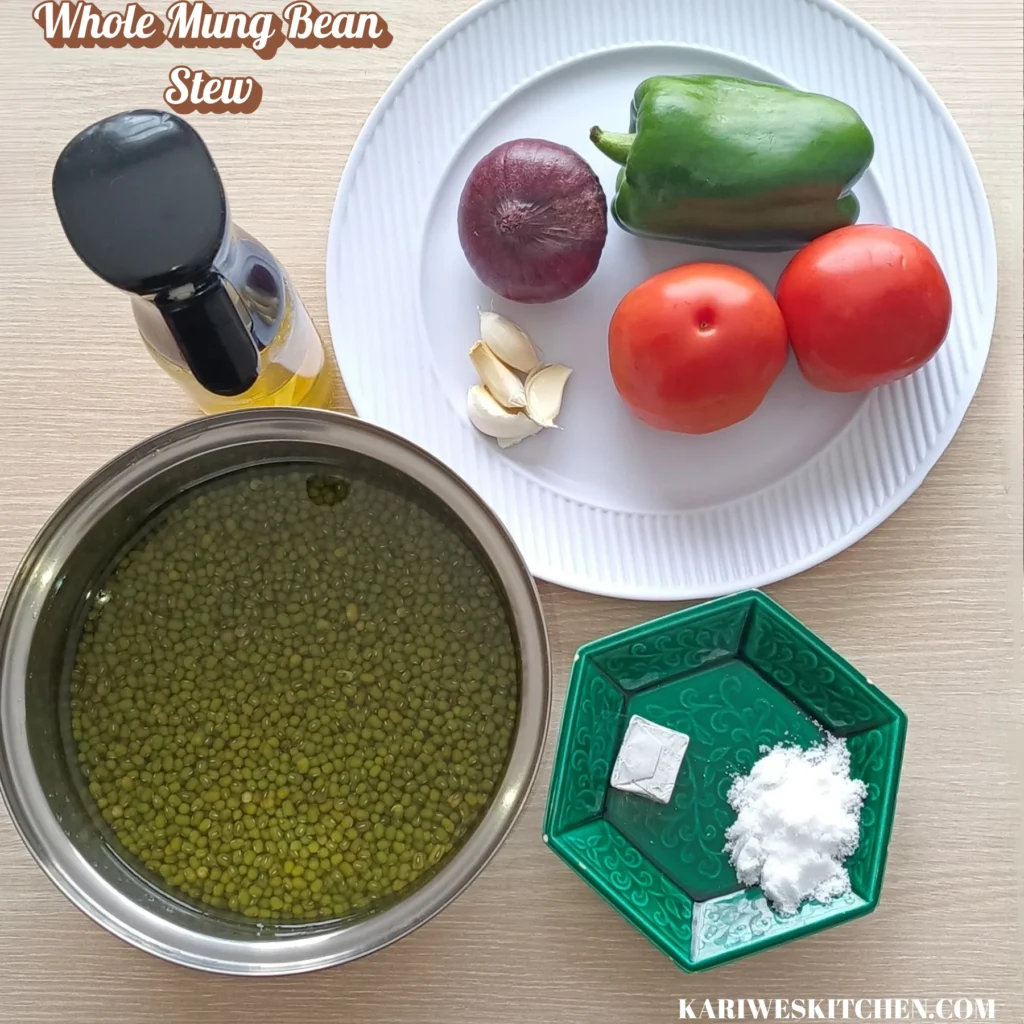
Every great dish starts with simple ingredients, and this one is no exception. What makes it shine is how these ingredients come together to create layers of flavor.
What You Will Need
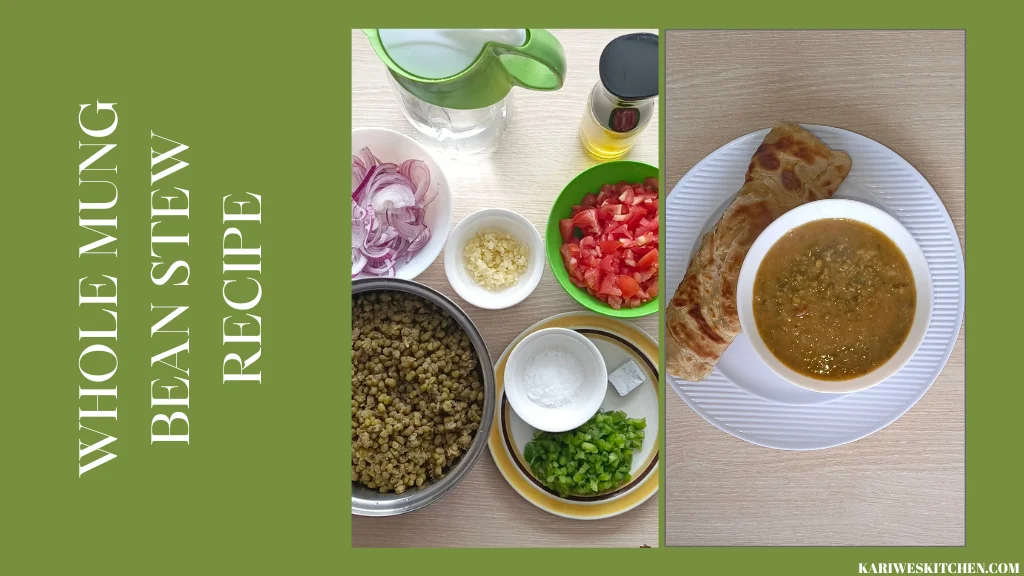
- 500 grams mung beans (green grams)
- 1 medium onion
- 2 medium tomatoes
- 1 green pepper
- 4 garlic cloves
- 1 chicken bouillon cube
- Salt to taste
- Cooking oil
- Water
At first glance, it may not appear to be much. But do not let that fool you, this combination is powerful in its simplicity.
A Slow Beginning: Soaking the Mung Beans
Every good story starts with a little patience. Before anything else, you clean your mung beans and soak them for about an hour. It may seem like a small step, but it makes a significant difference. Soaking helps soften the beans, reduces cooking time, and makes them easier to digest.
As they sit in water, slowly rehydrating, it is almost like they are preparing themselves for what is to come. This is also a great moment to pause. Maybe sip some tea, tidy up your kitchen, or simply enjoy the quiet anticipation of a meal in progress.
The Gentle Boil: Letting Time Do Its Work
Once soaked, the mung beans go into a pot with fresh water and are left to boil. This stage takes about 40 minutes, and it is where the magic quietly begins.
As the beans cook, they soften gradually, absorbing water and becoming tender. The kitchen starts to fill with that earthy, comforting aroma that only legumes can bring. There is no rushing this part. It is a reminder that some of the best meals take time, not because they are complicated, but because they are worth waiting for.
Building Flavor: The Heart of the Stew
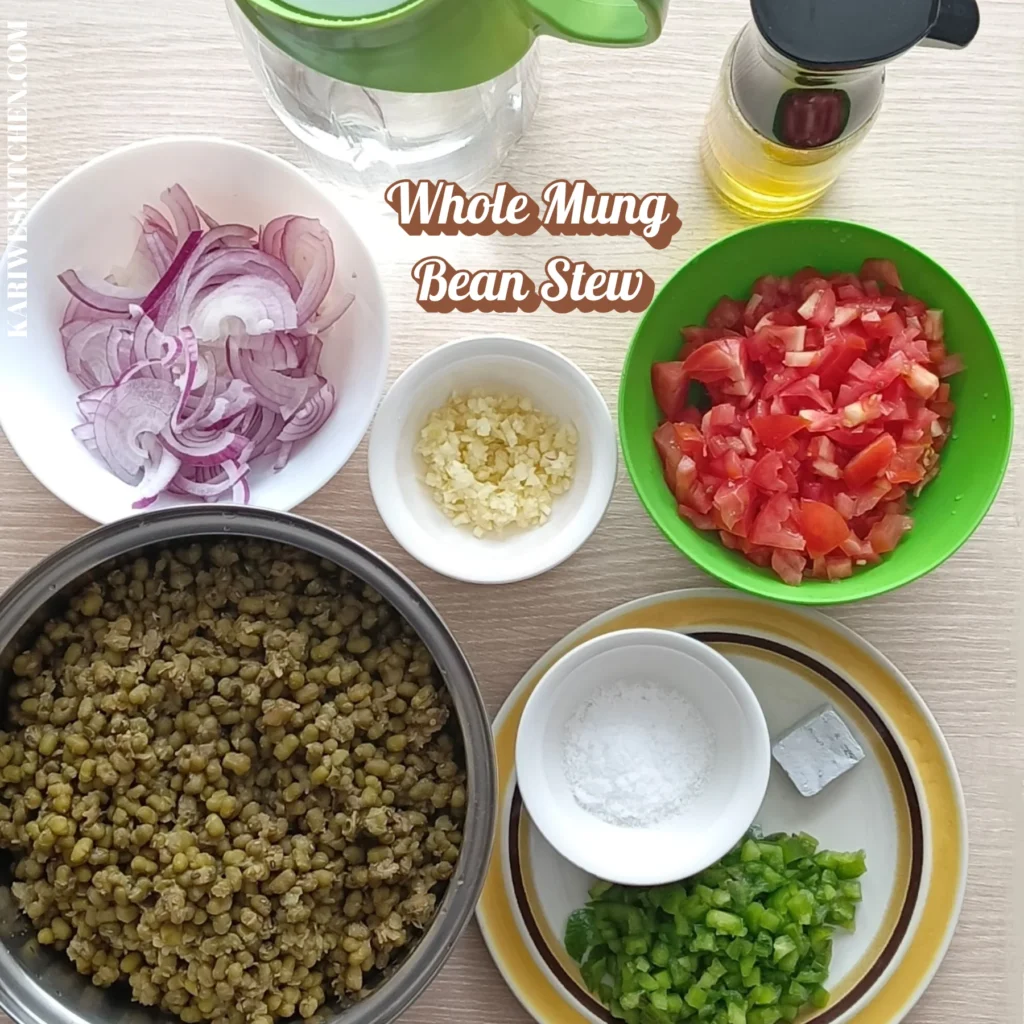
While the mung beans finish cooking, it is time to prepare the base of your stew, the part that brings everything to life. You chop your onions, tomatoes, green pepper, and garlic, laying them out like a painter arranging colors before a masterpiece. Then comes the sizzling moment.
Step-by-Step Flavor Building
- Heat your cooking oil in a pan over medium heat.
- Add the onions and fry until they turn soft and translucent. There is something satisfying about watching onions change, going from sharp and pungent to sweet and aromatic.
- Add the garlic and let it cook until fragrant. The smell alone is enough to make your stomach rumble.
- Stir in the tomatoes and green pepper, followed by the chicken bouillon and a pinch of salt. At this point, everything starts coming together. The tomatoes break down, releasing their juices, while the green pepper adds a subtle freshness. Let this mixture cook for about 2–3 minutes, just until the vegetables soften and blend into a rich, flavorful base.
Bringing It All Together
Now comes the moment where everything meets. You add the cooked mung beans to the pan, stirring them into the tomato mixture. The beans soak up all that flavor, transforming from simple legumes into something much more exciting.
Add water, depending on how thick or light you want your stew. Some prefer it hearty and thick, while others like it a bit more soupy; there is no wrong choice here.
Taste the stew and adjust the salt if needed. This is your chance to make it perfect for your palate. Then, cover the pot and let it simmer gently for about 8 minutes.
The Final Simmer: Where Comfort Is Born
As the stew simmers, everything settles into harmony. The flavors deepen. The texture becomes richer. The aroma fills your kitchen in a way that feels both grounding and inviting.
This is the moment when the stew becomes more than just food; it becomes an experience. You lift the lid, give it a final stir, and there it is: a warm, hearty pot of whole mung bean stew, ready to be served.
How to Serve Whole Mung Bean Stew
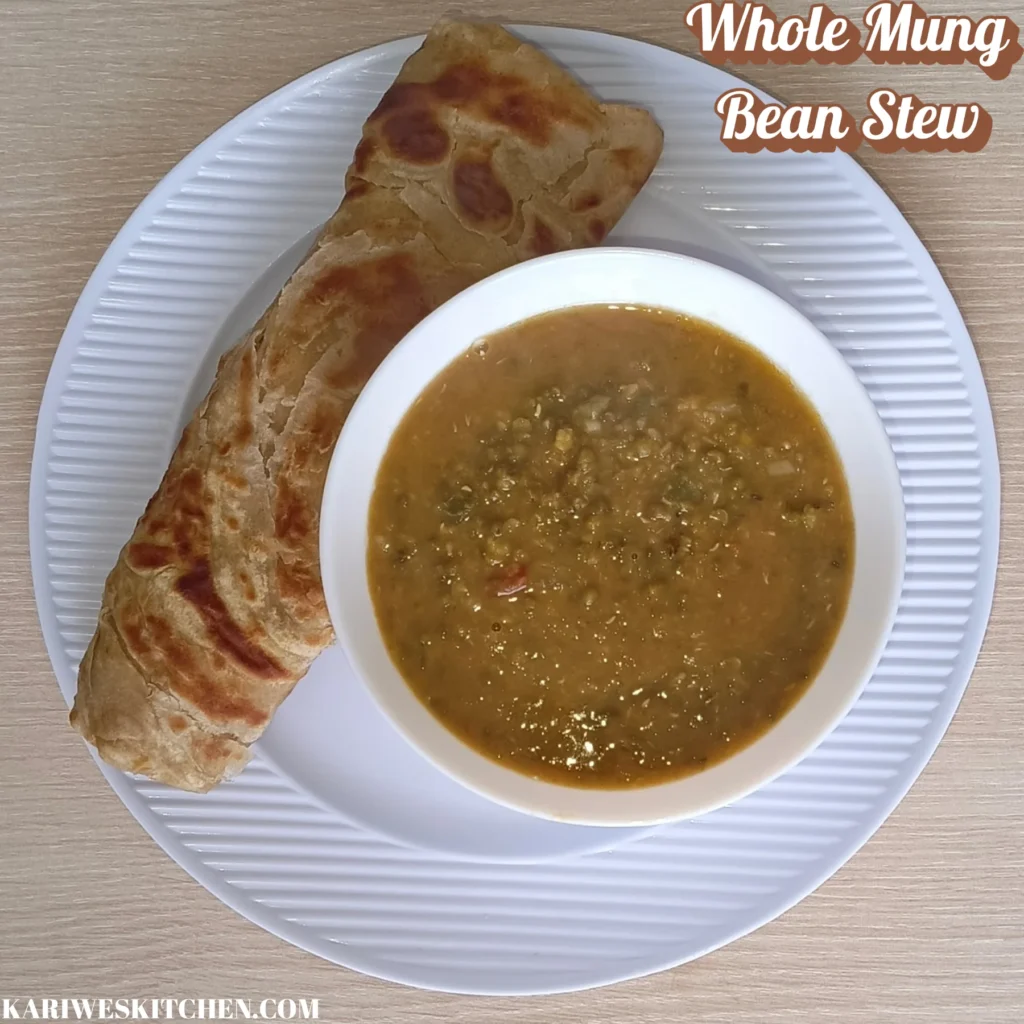
One of the best things about this dish is how versatile it is.
You can enjoy it:
- With steamed rice for a classic, filling meal
- Alongside chapati for a comforting, hands-on experience
- With ugali for a truly satisfying, traditional pairing
- Or even on its own as a light yet nourishing bowl
No matter how you serve it, it delivers the same warmth and satisfaction.
Why You Will Love This Recipe
This is not just another stew; it is a recipe you will come back to again and again.
- It is budget-friendly – Mung beans are affordable and stretch beautifully, making this perfect for feeding a family without overspending.
- It is nutritious – Packed with protein, fiber, and essential nutrients, this stew is as good for your body as it is for your taste buds.
- It is easy to make – No complicated steps, no hard-to-find ingredients, just simple cooking that anyone can master.
- It is perfect for meal prep – Make a big batch and enjoy it over several days. It reheats beautifully and often tastes even better the next day.
Helpful Tips for the Best Mung Bean Stew
Even simple recipes can benefit from a few thoughtful tips.
- Soak for better results – Do not skip the soaking step. It reduces cooking time and improves texture.
- Cook until fully tender – Undercooked green grams can feel tough. Make sure they are soft before combining them with the sauce.
- Adjust the consistency – Prefer a thicker stew? Use less water. Want it lighter? Add a bit more.
- Enhance the flavor – You can add spices like curry powder, cumin, or paprika for a twist, but even without them, this stew shines.
A Dish That Feels Like Home
What I love most about this whole mung bean stew is not just how it tastes, but how it feels. It is the kind of dish you make when you want something reliable.
Something that does not demand too much from you, yet gives back so much in return. It reminds you that good food does not have to be complicated. That sometimes, the simplest meals are the ones that stay with us the longest.
And maybe that is why this stew has become such a staple, not just in my kitchen, but in many homes. Because it is more than a recipe. It is comfort in a bowl.
Conclusion: The Beauty of Simple Cooking
As the last spoonful disappears and the pot sits empty, there is a quiet satisfaction that lingers. You did not just cook; you created something nourishing, something meaningful, something real.
Whole mung bean stew is a reminder that cooking does not have to be elaborate to be special. With just a handful of ingredients and a little patience, you can create a meal that warms both the body and the heart.
So the next time you are wondering what to cook, remember this humble stew. Let it simmer, let it fill your kitchen with its comforting aroma, and let it remind you of the joy found in simple, honest food. Because sometimes, that is exactly what we need.